

Chickens are the most farmed land animal on the planet, and one of the most misunderstood. They are also some of the most curious, clever, social and affectionate beings you will ever meet. Every single one of them is an individual, with a personality, with friends, and with a whole inner life. The lucky ones, the ones who end up in loving homes or at a sanctuary, also have a name and a favourite human. The ones who do not are no less individual. They just never got to be known.
These are some of the things we have learned about hens and roosters over the years, some from scientists and some from our own rescued girls. A few of them will make you smile. Others will make you angry, or sad. All of them are true, and we think all of them are worth knowing.
A note before you read. Every fact on this page is about someone. Every statistic, every study, every sweet behaviour belongs to real, individual birds with their own stories. When we say “hens grieve”, we mean a specific hen, standing beside a specific friend. Please keep that in mind as you read.
Fifteen things everyone should know about hens
1. Hens talk to their chicks before they hatch
Long before a chick breaks out of their shell, their mother is already talking to them. She clucks softly to her eggs, and the chick peeps back from inside. By the time they hatch, they already know her voice. Motherhood begins before the first day of life.
2. In the egg industry, every hen has a brother who was killed at birth
This is the fact we most wish people knew. Male chicks cannot lay eggs, so the global egg industry has no use for them. Every year, around seven billion newly hatched male chicks are killed, usually by being ground up alive in a machine called a macerator, or by gassing. This happens in every egg operation that produces its own hens, from the biggest factory farm to the “ethical” free range brand to the backyard hatchery that supplies pet shops and feed stores.
If you have ever wondered whether eggs are cruel, this is the answer. For every hen laying eggs on a farm, a brother was killed at one day old so that she could exist.
3. Isa Browns are the most common laying hen in Australia, and their bodies are paying a terrible price
The Isa Brown is the beautiful caramel coloured hen you will see at nearly every egg farm in this country. The name comes from the French breeding company Institut de Sélection Animale, which developed her. She has been selectively bred over decades to lay around 300 or more eggs a year. Her wild ancestor, the red junglefowl, lays roughly 10 to 15 eggs a year, only in a single clutch, and only to raise chicks. The Isa Brown’s body is running a reproductive system at a speed evolution never designed for, and the cost is enormous.
We see it every week at NSW Hen Rescue: calcium depletion and brittle bones, reproductive tract cancers, egg yolk peritonitis, prolapses, chronic pain. It is rare for a hen to simply stop laying from age. Far more often, laying stops because something has gone wrong inside her, a tumour, an infection, a reproductive disease. That is why, at the rescue, we are never relieved when one of our girls stops laying. We are on alert. Her body has been pushed so hard for so long that even a pause is almost always a warning.
And that is the picture for the lucky few who are rescued. Every other laying hen in Australia, from caged to barn laid to free range to organic, is slaughtered at around 18 months old, the moment her production begins to drop. There is no retirement. No recovery. No kindly old age. The egg industry has no use for a hen once her output falls, and so she is killed, and a new young hen takes her place.
4. Hens can recognise more than 100 individual faces
Hens have excellent long term memories and strong facial recognition skills. They can recognise and distinguish roughly 100 different individuals, both chickens and humans, and they remember who has been kind to them, and who has not. Yes, your girls do know the difference between you and your partner, and yes, they probably have a favourite.
5. Baby chicks can do basic arithmetic
Researchers have shown that day old chicks can track small quantities, follow objects that have been hidden, and perform simple addition and subtraction. They are doing maths before they are a week old. They are also learning their mother’s voice, their siblings’ voices and the shape of the world around them, all at the same time.
6. Hens have at least 24 different vocalisations
They have a distinct alarm call for predators on the ground and a different one for predators in the sky. They have a soft chuckling sound for contentment, a clucking call that means “food over here”, a hushing call that tells chicks to freeze and the unmistakable loud cackling “I just laid an egg” announcement. They are talking to each other constantly, and most of it is not for us.
7. Hens see more colours than humans do
Chickens have full colour vision plus the ability to see ultraviolet light. The world they live in is brighter, richer and more detailed than the one we see. The next time you watch a hen cock her head at something you cannot see, remember she is probably looking at something real.
8. Hens dream
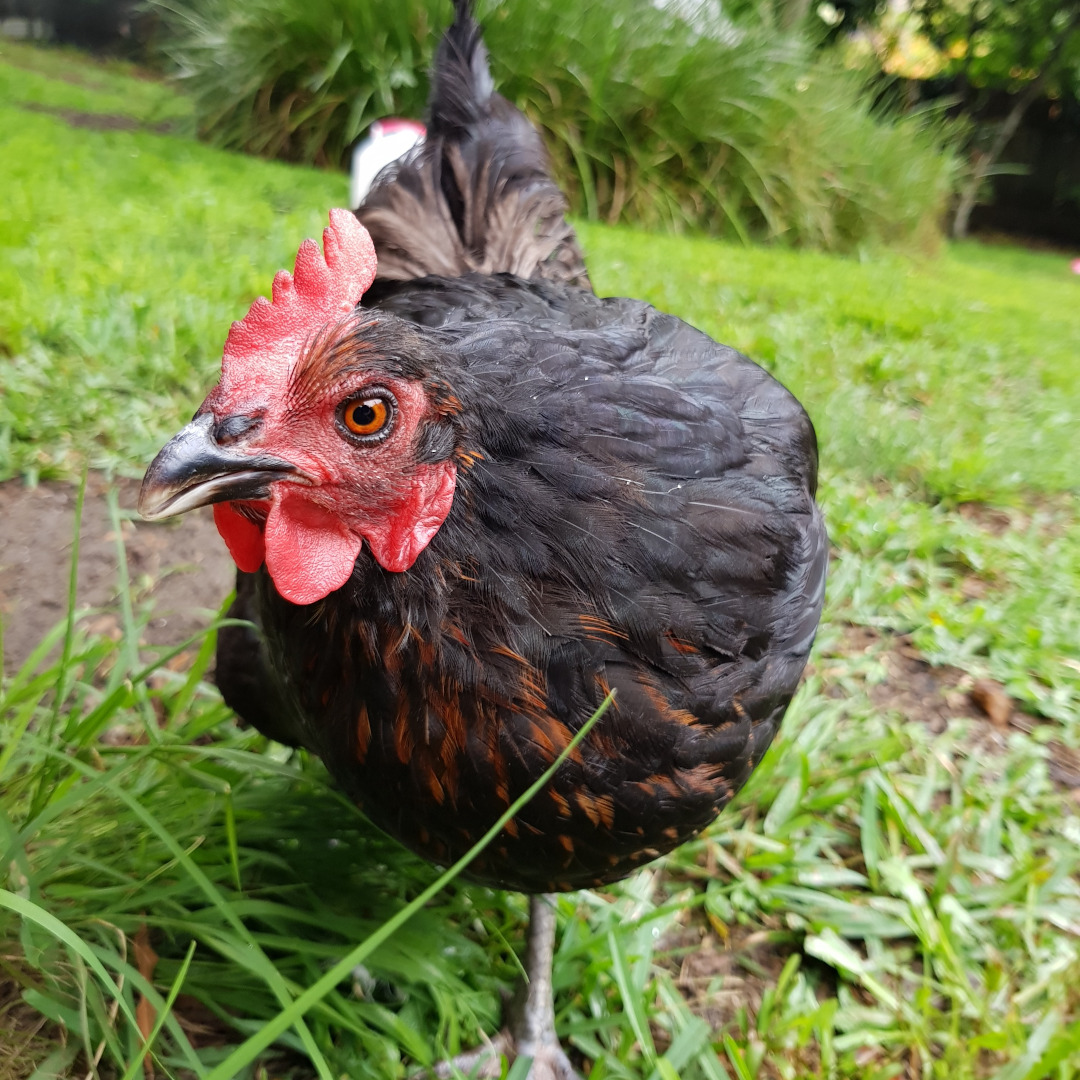
Hens have REM sleep, the same kind of sleep humans have when we dream. We do not know what a hen dreams about, but we know something is happening in there. We hope, with all our hearts, that the hens who are locked in cages and sheds right now are dreaming of grass, sunshine and a better life.
9. Chicks understand that hidden things still exist
Object permanence is the understanding that a thing does not stop existing just because you cannot see it. Human babies do not develop this until around six or seven months old. Chicks have it within days of hatching. They know their mother is still there when she walks around the corner, and they know their food is still in the bowl even when the lid is on.
10. Hens have best friends
Hens form genuine preferential bonds with specific members of their flock. They seek each other out, roost beside each other at night, and greet each other loudly after even a short time apart. If you separate two bonded hens, both will be visibly upset, and their reunion will be unmistakable. Anyone who has watched it happen never forgets it.
11. Mother hens feel what their chicks feel
A well known study at the University of Bristol found that mother hens show physical signs of distress, including increased heart rate, altered body temperature and tense alarm calls, when they see their chicks in mild discomfort, even when the chicks are not in real danger. It is one of the clearest demonstrations of empathy in any bird. A mother hen does not just care for her babies. She feels with them.
We include this study with mixed feelings. We do not support animal experimentation, and the hens in that research should never have had to prove what any chicken guardian already knows. But since the work has been done, we will at least use it to speak for them.
12. Hens grieve
When a flockmate dies, hens often stand quietly beside the body, stop eating, withdraw from the group for days, and sometimes return again and again to the places their friend used to sit. Anyone who has kept chickens for long has seen it. Anyone who has rescued them has watched it break their heart.
13. There are more chickens on Earth than any other bird
At any given moment there are around 33 billion chickens alive on this planet. Almost every single one of them is farmed. They are, by a very long way, the most numerous bird species on Earth, and also the most exploited. That is a staggering number. It is also 33 billion individual someones, not a number at all.
14. Hens dust bathe every day, for joy
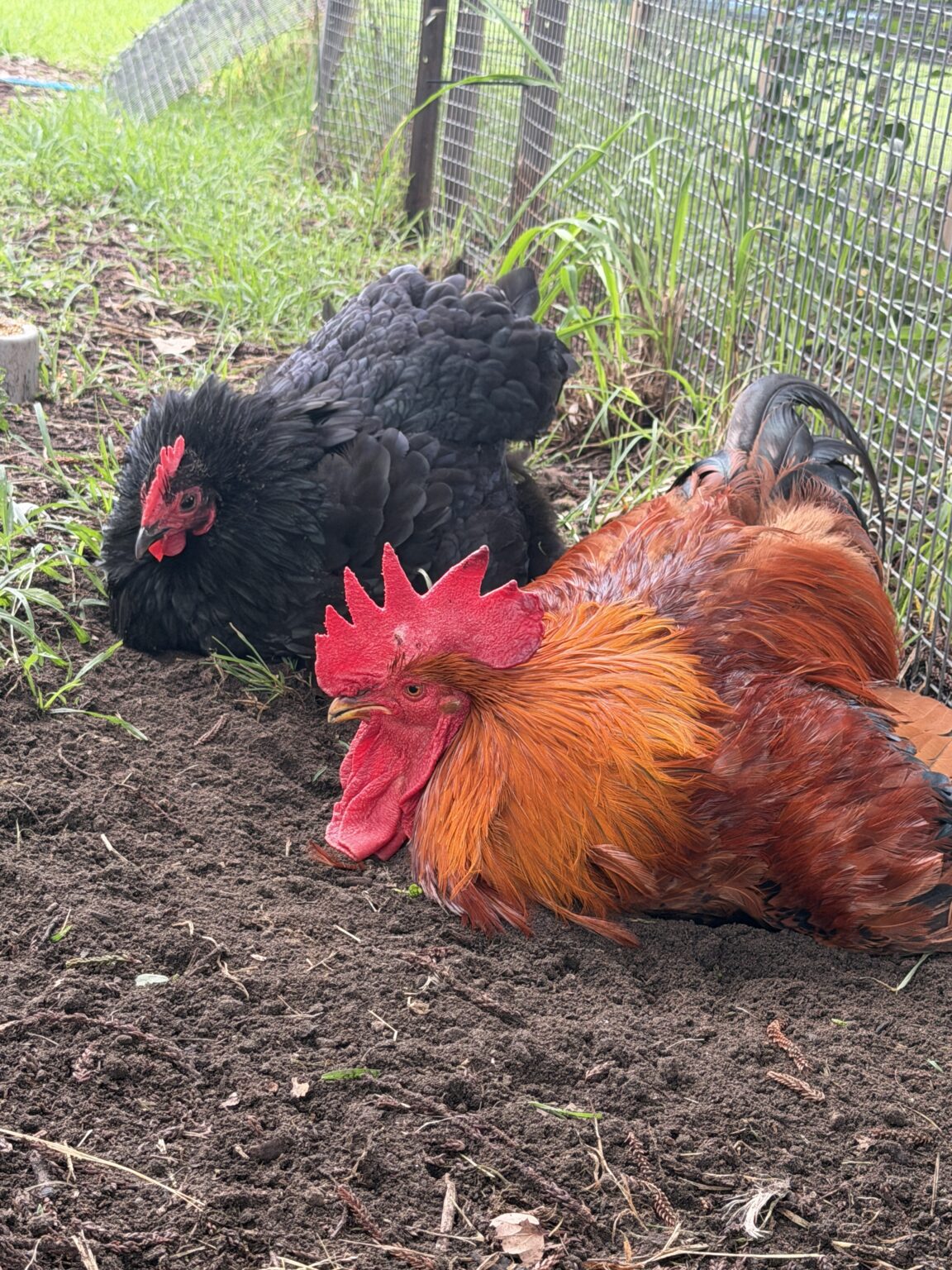
Dust bathing is how chickens clean themselves, condition their feathers and deter parasites. It is also one of the clearest expressions of chicken happiness you will ever see. A hen will scratch out a shallow hollow, settle into the dry dirt, fluff up her feathers and roll around in complete bliss. If you want to know whether your girls are happy, watch them dust bathe.

15. Matilda, the oldest companion chicken on record, lived to 16 and never laid an egg
Matilda was a Silkie hen from the United States who made it into the Guinness Book of Records. Her veterinarians believed her lack of egg production contributed significantly to her extraordinarily long life. Most Silkies do lay, but Matilda, for reasons that were almost certainly biological, never did, and so her body was spared the reproductive cost that every other laying hen pays. She was able to grow old the way a chicken is supposed to grow old.
Just think about that for a minute.
How to love hens back
If these facts have made you look at chickens a little differently, here are a few small things you can do to repay them. Every one of them adds up.
- Leave eggs out of your trolley. The simplest, most effective thing you can do. Every egg has a dead male chick behind it, and every egg keeps the system that killed him running. Leaving eggs behind is a direct, tangible kindness.
- Adopt rescued hens if you have a safe garden. Ex battery hens are some of the most grateful, most affectionate companions in the world. Watching a hen who has never stood on grass take her first steps into sunshine is a memory you will carry forever. Here is where to start.
- Support the rescues that are pulling hens out of cages. Rescue work is exhausting and expensive, and it only happens because people fund it. Donating to NSW Hen Rescue pays directly for the food, medical care and transport that saves lives.
- Tell people what you just read. Share this page. Email it. Print it. Talk about it at dinner. Most people have simply never been told any of this, and quietly learning it can change everything.
Every one of them is a someone
Chickens are not an abstraction. They are not a category. They are a friend you have not met yet, waiting to be noticed. Thank you for noticing them today.