
Our Handy Guide to Caring for Ex-Battery Hens
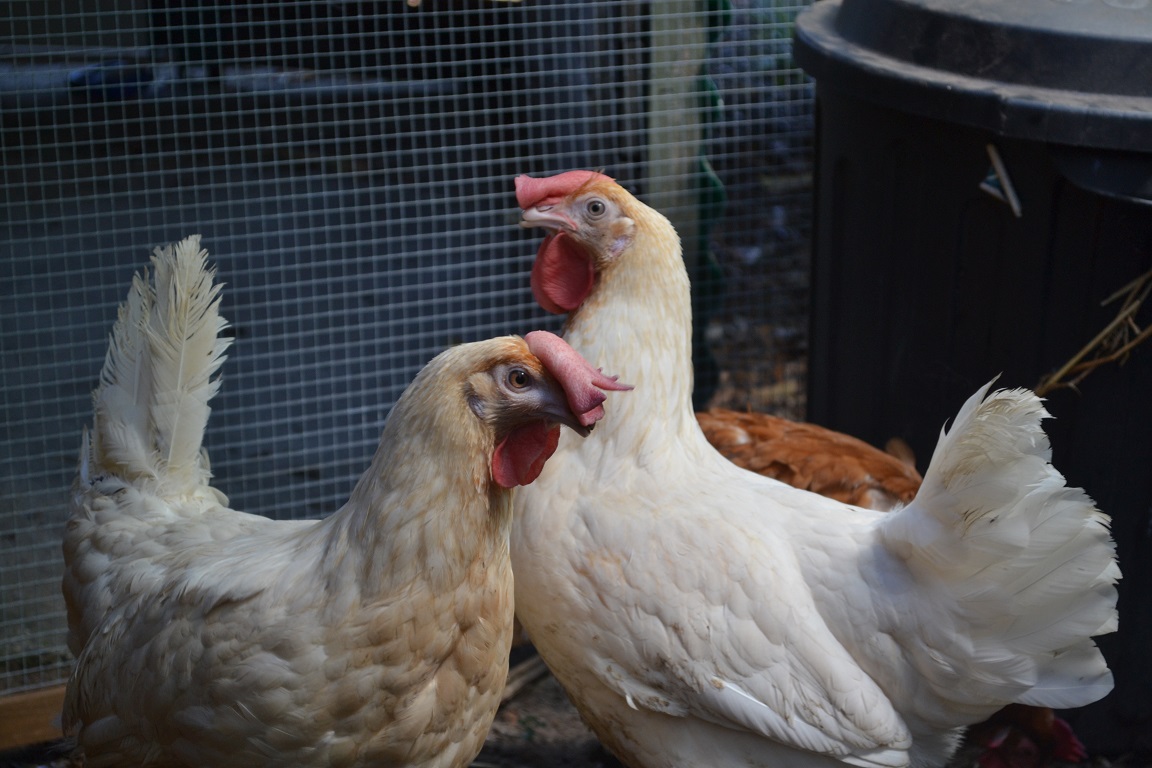
Even if you have cared for hens before there are a few things you need to be aware of when you bring your ex-factory farm hens home. After all these gorgeous girls have spent the first one to two years of their lives in a cage with three to six other hens or packed in a barn with thousands of other birds, barely able to move.
Can you imagine how they must feel as they experience sunlight for the first time and are able to stretch their wings and scratch the earth?
Part of the joy of adopting ex-factory farmed hens is watching them discover their natural hen ways. Along with these positives there are some things to be aware of, but as long as you are prepared you will be fine.
Feeding

Intensively farmed hens have been fed layers mash their whole life, so it is very important that you feed this to your new girls, at least for the first week. Layers mash is the finest food in the picture to the left. The best thing to do is to start mixing in some of your preferred feed such as a grain mix with the layers mash until they get used to it or offer it in two bowls so the girls can pick which they prefer.
Remember that they have never had any treats before, so it is important to introduce them slowly. You may find that your hens don’t recognise the treats as food to start with. As much as you want to pamper your hens, if you let them eat vegetable peel or fruit straight away they will get ill, so keep it slow and steady.
Water
The hens will need a constant supply of water in the day. Whilst in the cages or on the barn floor they will have got water from a small, metal drip feeder, which only gives them a drop at a time. This means that they have never drunk with their heads down before.
Over the first few days it is important to keep an eye on your hens to check that they all understand where to get the water from and that they are all drinking enough. They may need some help working it out.
For the first day splash your fingers in the water bowl every time you go to see the hens. You will see their heads perk up as they listen curiously to the splashing noise. This will encourage them to investigate with their beaks and realise where the water is. Once they realise they will love taking big gulps of water. To them it is a real treat compared to the little drips they are used to

Bad Behaviour
The hens will have to re-establish a pecking order. After all they probably are not from the same cage. This means that they may peck at each other and some fighting may occur. This is to be expected and will usually settle down within a few days, but you should keep an eye on the hens and make sure no one is getting seriously picked on or hurt.
A common reason for bullying is that the hens do not have enough space to get away from one another. If you can provide them with more space you will find the fights settle down.

Fights often start over food, so try putting more than one bowl of food in different areas of the garden or enclosure. The dominant hen will not be able to guard them all at once.
You can also add distractions to give the hens something else to do rather than pick on one another. Try hanging up shiny CDs or a cabbage for them to peck at.
If things are really bad you may need to separate the bully from the others for a while. This will give the girls time to establish a new pecking order and things shouldn’t be as bad when she goes back in. You can also separate them into two areas of the garden with chicken wire and they can see each other through the fence. When they begin to ignore each other you should be able to reintroduce them with no problems.
The thing to remember is that these hens have been through a lot and the bad behaviour should stop within the week. Please be patient with them and look out for any hens that may be being bullied. You may feel a bit like a referee for the first few days, but things will settle down.
Introducing Rescued Hens to the Rest of Your Flock
It is possible to introduce previously intensively farmed hens to an already established flock, although it must be done with care. It is also a good idea to stick to hens of a similar breed.
For at least the first month hens should not be kept with roosters. The roosters may intimidate them and can accidentally hurt them, as ex-battery hens have fragile legs from lack of exercise, a poor diet and excessive laying. That said, roosters can often make introductions much easier and frequently act as a referee for the girls, breaking up squabbles and keeping the peace. Once your rescued hens have settled in and built up their strength, a rooster can be a wonderful addition to the flock and there are many abadoned roosters who need loving homes.
It is a good idea to keep the new hens in a separate area from your established flock. Keep the two areas separated with chicken wire, so that the hens can see each other, but not bully one another.
When you introduce the girls put down some food in several areas to distract the hens from each other. Introduce in the most neutral and spacious area you can manage.
At first you may see some of the hens puff their feathers out and adjust their posture to make themselves look bigger. This is to show their dominance. Once this posturing stops you can usually take the fence down and let the hens in together. Just keep an eye on them to make sure no bullying occurs.
Health, Vaccinations and Worming
When factory farmed hens are chicks they are loaded with vaccinations. This means that you will not have to worry about vaccinating them. It is important to worm your hens upon adoption unless this has already been done by the rescue, and then every three months after that.
Ex-factory farmed hens may also suffer from lice. You can examine their feathers for these parasites. They look like clear fleas. You can then treat them with a spray such as Avitrol bird and lice spray, available from feed or pet stores. We recommend using a spray rather than a dust, as dust can be harsh on their lungs and harder to apply thoroughly.
You may notice the hens dust bathing a lot. This is a natural behaviour that they have never been able to express in the cages, and they absolutely love it! Dust bathing is also how hens naturally help to keep parasites at bay.
When you first adopt your ex-factory farmed hens it is important to look out for any signs of ill health. If you have a particularly quiet or nervous hen take some time to check she is eating and drinking and that she is not being bullied.
If she needs a boost you may want to mix two tablespoons of sugar in with 100 ml of boiling water. Let the water cool and administer it by syringe. Let her swallow each drop before giving her more. This should give her some energy to eat and will help with shock.

Hens from intensive farms are often suffering vitamin deficiencies when they come out. The most common deficiencies are calcium and vitamin D. Sunlight and good food are a great start to build up their health. Giving the girls a vitamin such as Vetafarm multivet supplement can give them a good boost.
Feeding the girls back their eggs is a great way to give them a boost. By giving them their eggs either cracked on the ground (shell and all) or hard boiled it is like giving them back the vitamins they loose through laying so often. Just don’t crack them into their nest as that may encourage them to peck their own eggs before you have collected them, making a mess and attracting flies.
The Chicken Coop

Ensure your chicken coop provides shelter for the girls and is safe from predators. Remember it is possible for predators to dig underneath, so ideally the night time coop should be on concrete, off the ground or have wire buried into the ground. Please also bear in mind that many predator attacks happen in the day. If you live in a rural area or you live near bush you should ensure the hens have a secure, spacious day time enclosure to roam in where they are safe from predators.
The hens may have weak legs from lack of exercise, a poor diet and excessive egg laying, so try to ensure there are not too many perches or other obstacles to start with. If your coop has a ramp you may need to lift the hens up in the evening until they gain strength and learn their routine. You will probably notice that they choose to snuggle in the straw rather than the perches at first.
Provide the hens with plenty of cosy straw, as they will be used to the warm environment of the battery farm. It is especially important to ensure they are warm enough in winter. Some hens will have lost many feathers in the cage and could struggle if they are not given enough shelter and bedding.
The coop should also have good ventilation for the summer. Heat stress is one of the biggest dangers for hens and can be fatal very quickly. Ensure they always have access to shade, fresh cool water and good airflow, especially on hot days.
Eggs
The most commonly used hens in industrial egg farms are isa browns and white leghorn hybrids. They have been bred to lay an unnatural amount of eggs through selective breeding. Some people assume that hens laying eggs means that they are happy, but that is not the case with these girls. They will lay eggs even under the high stress conditions of the battery farm. Excessive egg laying can take its toll on the hens’ little bodies which can mean that by the time they get to you they may not be laying many eggs.
Other reasons the girls may not lay eggs include less light on shorter days, old age, being underweight or going through a moult. Whilst it can be a blessing if the hens do not lay eggs, as it gives their bodies a break and time to recover, it can also be a sign of reproductive disease.
If your hen has stopped laying or is laying irregularly, it is worth having her checked by an avian vet. A Suprelorin implant may be recommended to suppress egg production and reduce the risk of conditions such as egg yolk peritonitis, reproductive cancer, and other reproductive issues that are sadly very common in ex-commercial hens.
If the girls do lay eggs we recommend feeding the girls back their eggs to give them a bit of a boost. You will notice if you feed the eggs back the hen’s feathers will grow back faster and they will get very excited about their daily treat. Be sure to add extra grit to the hens’ diet in addition to these shells, as calcium is so important for healthy hens. You may wish to consider a calcium supplement, especially if your girls are laying soft shelled eggs, which may cause them problems in the long run.
You may notice that hens stop laying during the winter months as the days become shorter.
Please remember that rescues rehome hens as companion animals, not for egg production.
When you adopt from us, you will be asked to sign an agreement that the hens will not be killed or given away when they stop producing eggs. After everything these girls have been through, they deserve to be loved and cared for as members of your family, not as egg laying machines.
With a little patience, love and care, these girls will flourish. They will finally get to feel the sun on their feathers, dust bathe to their hearts’ content, and live out their days as the happy, curious, cheeky chickens they were always meant to be.