
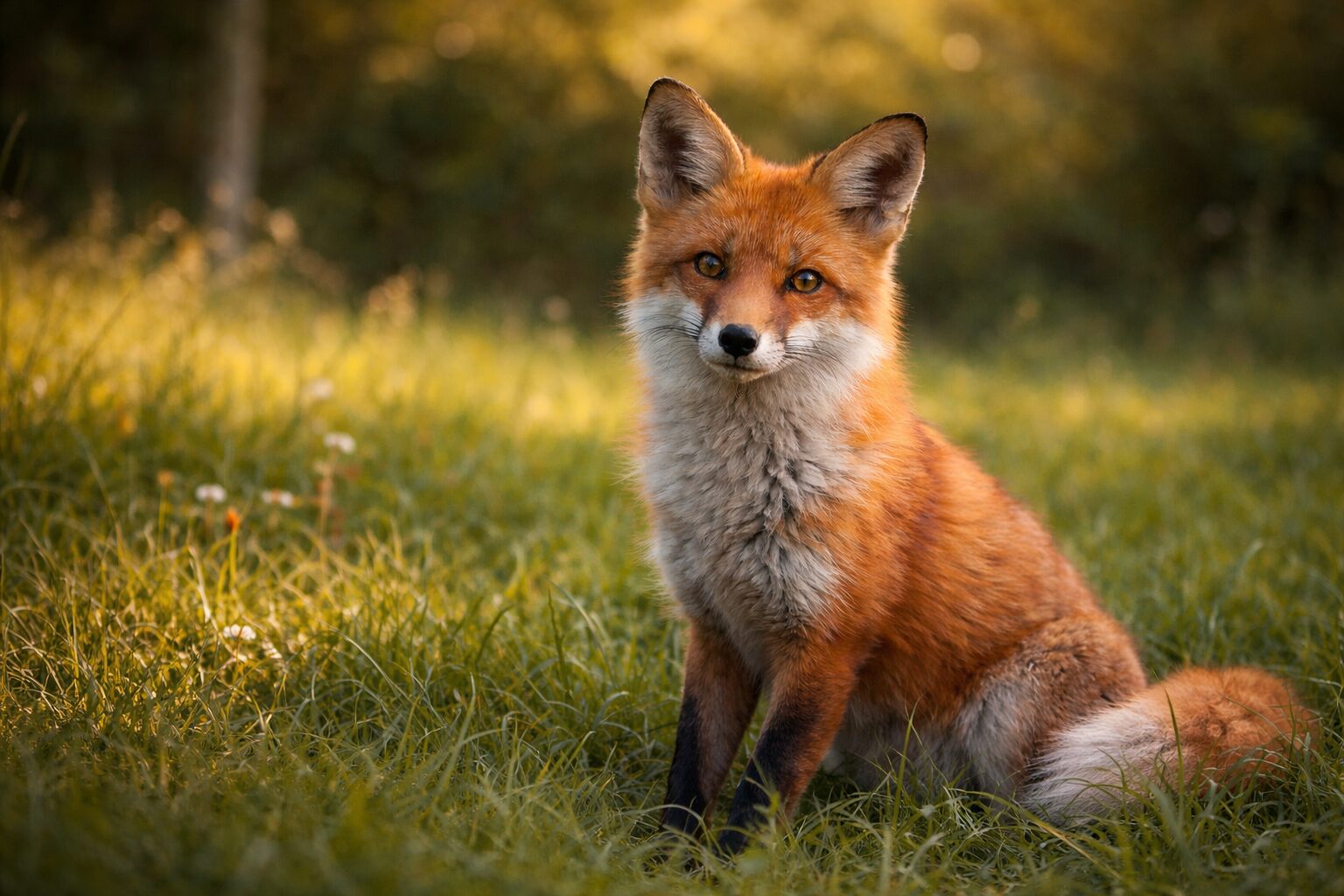
Foxes are intelligent, playful, family-oriented animals. They did not ask to be brought to this country, and they do not deserve what 1080 does to them.
1080 is one of the cruellest poisons on earth. Please help us end it.
1080 (sodium fluoroacetate) is an odourless, tasteless, water-soluble poison that is laid in Australian bushland, farmland and the outer edges of our suburbs, most commonly to kill foxes and dingoes. It is spread by ground baiting and by aerial drops from helicopters and planes. There is no antidote. Death takes many hours, and by every honest description of it, the hours in between are appalling.
This page exists because most people have no idea what 1080 actually does to the animal who eats it, or that it can just as easily kill a companion dog, a curious cat, or any native animal who finds the bait. If you are reading this because you have just learned there is baiting in your area, please scroll down to If 1080 is being laid in your area for what to do next. And if your dog or cat has been poisoned, please call the Animal Poisons Helpline on 1300 869 738 immediately. They operate 24 hours a day.
Take this with you
We have put together two short resources you are welcome to download, print, share with your neighbours, or send to your council. Please use them however you like.
- 1080 Fact Sheet / Neighbourhood Handout(PDF, 2 pages)
- Letter to my council – Template(PDF, 2 pages)
- Letter to my council – Editable Word version(.docx)
What 1080 actually does
1080 blocks the body’s ability to produce energy at the cellular level. It interferes with something called the citric acid cycle, which is how every cell in the body turns food into the fuel it needs to function. The heart, the brain, the muscles, the nervous system: none of them can work properly without it. When an animal eats 1080, that process shuts down over several hours, and the body slowly runs out of the energy it needs to stay alive.
What this looks like from the outside, and what is described in veterinary literature and by eyewitnesses, is vomiting, extreme anxiety, disorientation, drooling, uncontrolled running, convulsions, loud distress calls, and seizures, followed eventually by paralysis and death. The symptoms in a fox or a dog can continue for up to 48 hours before death finally comes.
“Like being electrocuted for two days straight.”
A veterinarian’s description of what 1080 does to the animal who eats it.
There is no antidote. Once a dose has been absorbed, there is almost nothing a vet can do except sedate the animal if they get to them in time. Most animals who eat 1080 die in the bush, alone, and nobody sees it.
1080 is not species-specific
This is the part that surprises most people. 1080 cannot distinguish between a fox and any other animal. It kills any creature who eats a lethal dose, and a lethal dose for many species is very small. Dogs are especially sensitive to it. Cats are sensitive to it. Native carnivores and scavengers such as quolls, goannas, raptors and crows can also be killed, either by eating the bait directly or by eating the body of an animal that was killed by it. This is called secondary poisoning, and it happens.
1080 is also water-soluble. Baits left out in the rain or heavy dew can leach poison into puddles, creeks and dams. It does not break down quickly in cold or dry conditions. It lingers.
The people who authorise 1080 baiting will often tell you the baits are “targeted”. They are not targeted in any meaningful sense. They are a piece of meat in the bush that any animal with a nose can find.
Companion dogs and cats are at risk
Every year in Australia, beloved family dogs and cats die from 1080 poisoning. Some find baits that were laid in bushland their owners thought was safe to walk in. Some find the body of a native animal or a fox that was killed by a bait and scavenge from it. Some escape the yard for an hour and never come home.
If you live anywhere near an area where 1080 is used, please keep dogs on leash in any bush or rural area, keep cats indoors or contained, and watch for the yellow or red warning signs councils and land managers are required to display. If your animal shows any symptoms after being in a baited area, including vomiting, anxiety, trembling, disorientation or seizures, treat it as a life-threatening emergency and get them to a vet immediately. Call the Animal Poisons Helpline on the way.
Cubs are left to starve
A vixen who eats 1080 does not die quickly, and she does not die near her den. She walks, and runs, and hides somewhere private before her body finally fails. Her cubs wait for her in the den, and when she does not come back, they slowly starve to death. 1080 baiting is very often carried out in spring, which is when fox cubs are tiny and most dependent on their mothers. The official figures never count those cubs.
1080 is not just a poison. It is also a sentence of slow starvation for every cub left crying in a den for a mother who will never come back.

Fox cubs depend on their parents for months. When a vixen is killed by 1080, her cubs are left to starve.
Foxes are individuals
Foxes are routinely described in Australia in words that hide who they actually are. They are called a “pest”, a “problem”, an “invasive species”. These words do a job. They make it feel acceptable to poison them.
Anyone who has spent time near foxes will tell you the same thing. They are intelligent, playful, curious animals. They form strong family bonds. Parents raise their cubs together. They recognise each other, groom each other, and mourn each other. They did not choose to be in this country. They were brought here by British colonists in the 1850s for sport hunting, and they are here because of us. That does not make it acceptable to torture them to death.
Protecting native wildlife is a legitimate goal. Torturing introduced animals with a poison that also kills native wildlife, family pets and orphaned cubs is not the way to do it.
Kind alternatives exist
Every honest conversation about fox control has to include the fact that lethal control has been running for decades in Australia and the fox population is still here. You cannot poison a species out of existence when there is suitable habitat and food for it. What lethal control does is cause suffering on an enormous scale without achieving what it claims. There are better ways.
Protect what needs protecting.
Where the concern is a specific threatened species, the most effective protection is usually predator-proof fencing around the breeding area, along with habitat restoration. This works. It saves actual animals. It does not kill family pets or native scavengers as collateral damage.
Better fencing, not poison.
Fox-proof fencing and well-managed lambing sheds already exist and already work. If the goal is genuinely to prevent fox predation on farming properties, the tools are available. Poisoning the surrounding landscape is not a solution. It is a choice, and it is a cruel one.
Secure coops for chickens.
If you care for chickens, your birds are safest in a properly built coop that is locked at dusk, with buried mesh or a fully enclosed run. A fox who cannot get in will not eat your hens. Poisoning foxes in the wider area does not protect your flock, because there will always be another fox. A secure coop does. We have a detailed guide on our predator protection page.
Fund fertility control now.
Immunocontraceptive vaccines like GonaCon already exist and have been successfully used in other species, including horses and kangaroos. Research into fox-specific fertility control has been running since the 1990s, but it has never received the funding it needs to move from the lab to the field. Governments spend millions every year on lethal baiting programs that cause enormous suffering and do not solve the problem. Even a fraction of that money redirected into fertility control research could change everything. The science is there. What is missing is the political will to fund it.
If 1080 is being laid in your area
This is the part of the page most people will find by searching in a panic. Here is what we would do, in order.
1. Keep animals safe. Keep dogs on a lead and out of any bushland, national park, farmland or reserve where 1080 is being used. Keep cats contained. Look for warning signs (they are usually yellow or red and mention “1080”) and take them seriously. Warning signs are legally required to be posted around baited areas.
2. Talk to your neighbours. Most people in a baiting area have no idea it is happening. Print out our neighbourhood handout and letterbox-drop it on your street, especially to any home with a dog or a cat. If even a few neighbours bring in dogs and lock up cats for a few weeks, lives will be saved.
3. Contact your council. If baiting is being carried out by a local council, ring them and put a complaint in writing. Ask them to stop the baiting program and collect any remaining baits. You can find contact details for any NSW council at the official Find My Council page. In other states, search for “find my council” plus the state name. Try to reach individual councillors as well as the general contact address, because they are elected and they listen to voters. Be aware that councils sometimes say the baiting is not their decision. If that happens, ask them who authorised it, and write to that body as well.
4. Contact your state MP. In many cases, 1080 baiting is carried out by Local Land Services or National Parks rather than council. Your state member of parliament can raise this directly with the responsible agency. You can find your NSW MP at the NSW Parliament members directory. In other states, search “find my state MP” plus your state name.
5. Write to the local paper. Letters to the editor still work. A well-written letter that describes what 1080 actually does, and the risk to family pets, gets shared and remembered.
We have a letter template you can use for steps 3 and 4. It is written in a polite, calm tone, and you can edit it to name your own council or MP and your own street.
We have written a letter you can use. It sets out what 1080 does, why it is cruel, why it is a danger to family pets, and asks council or state government to stop the baiting program and fund non-lethal alternatives. You are welcome to download it, adapt it, or copy it straight into an email.
Download the letter (PDF) · Download the editable Word version
If your dog or cat has been poisoned
Treat it as a life-threatening emergency. Get them to the nearest vet immediately. On the way, call:
Animal Poisons Helpline – 1300 869 738
The helpline is free, staffed by specialist toxicologists, and operates 24 hours a day, 7 days a week. They will tell you what to do in the minutes that matter most.
A note from us
1080 has been used in Australia for a very long time, and the people who authorise it have come to see it as ordinary. It is not ordinary. It is one of the cruellest ways a living creature can die, and it is being dropped into places where family pets walk, native animals hunt, and fox cubs wait for a mother who will never come home. If you have read this far, you now know what 1080 does. Please do not look away. Write the letter. Talk to your neighbours. Make some noise. These animals need people who will speak for them.
Thank you for caring enough to read all the way to the end.