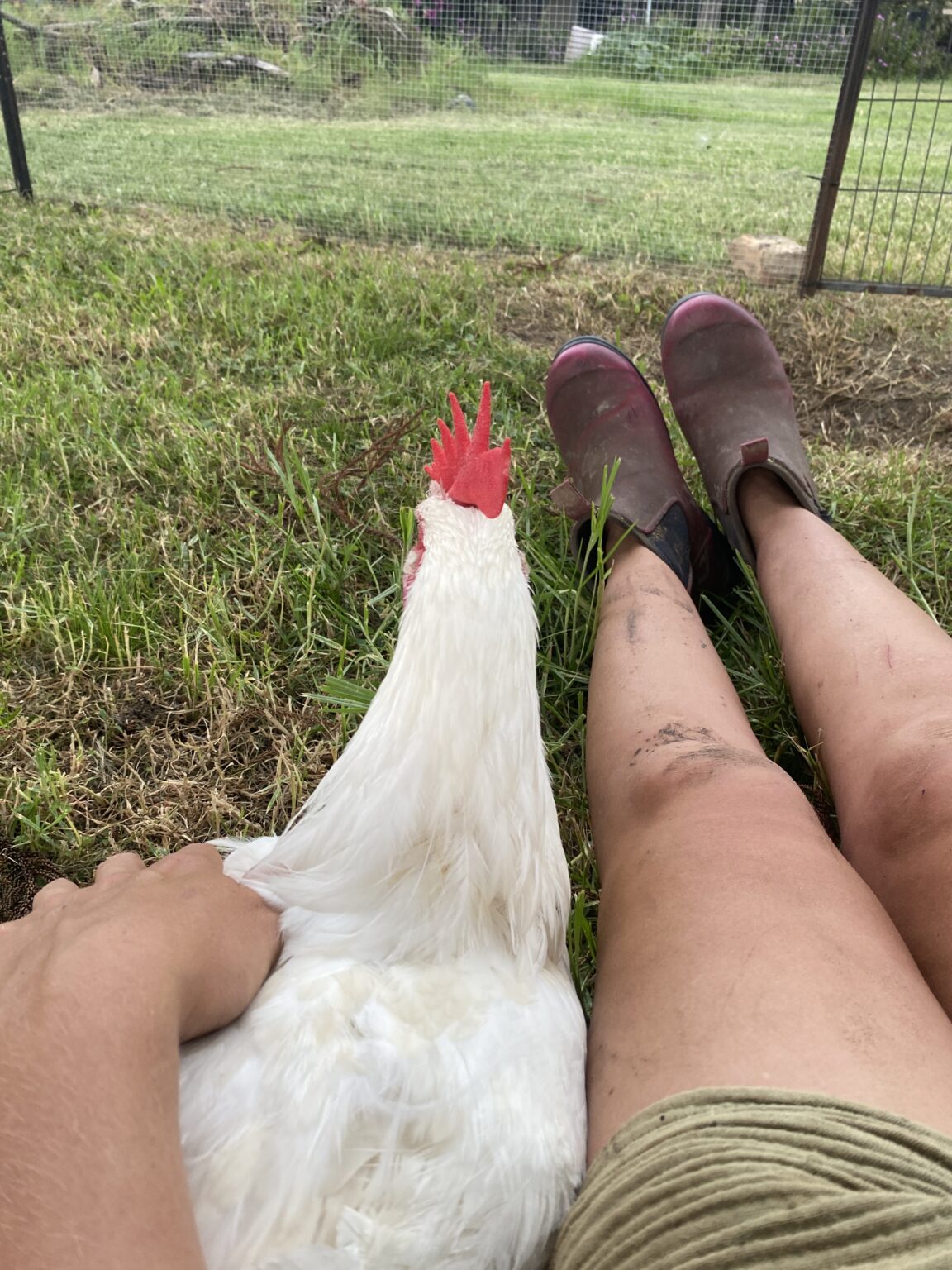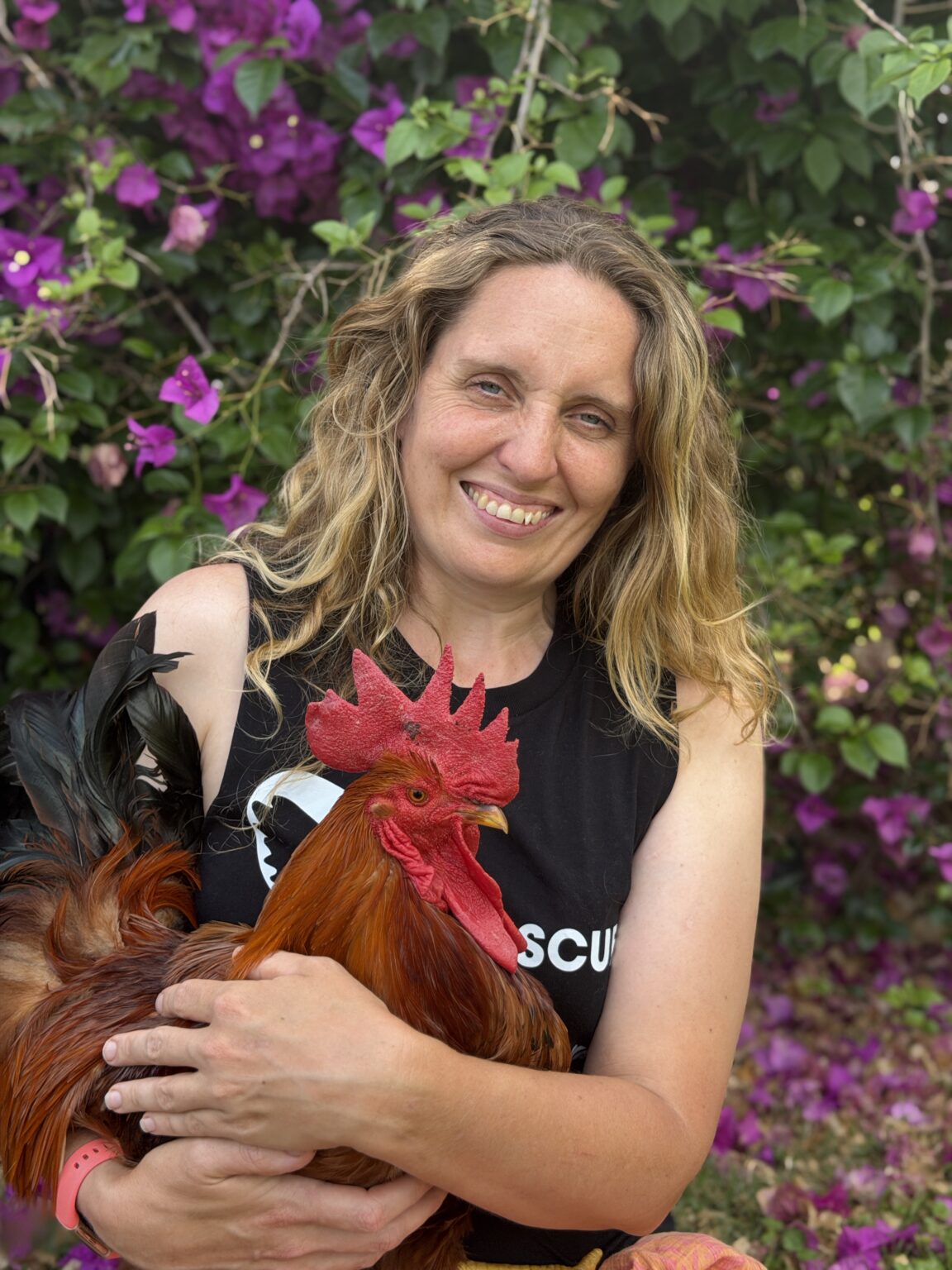
We get emails and messages every single day from people trying to find homes for unwanted or dumped roosters. Most of these stories start the same way: a hen turned out to be a he, a school hatching project sent chicks home, or someone brought home “female” chicks that grew up to crow.
At NSW Hen Rescue we currently care for over 40 permanent rescued roosters, and we are completely full. Like almost every farm animal rescue in Australia, we are turning away far more roosters than we can take in. That is the hard truth you will find on this page, and we will not pretend otherwise. What we can do is share everything we have learned about giving a rooster the best possible chance at a safe life.
This page is built around honest advice for keeping or rehoming a rooster yourself, because for most people that is the path most likely to work. Rescues and sanctuaries across Australia are already full, and a rooster’s best chance is almost always the person who is reading this now. If you would like to understand why we feel so strongly about this, please read They’ll Be Fine: The Lie That Costs Roosters Their Lives.
Have you just found or rescued a dumped rooster?
If so, thank you. He is incredibly lucky that you are the person who stopped. You did not create this situation, but because of you he has a chance where he had none. This page is absolutely for you too. Everything below about keeping him safely, understanding his behaviour, talking to neighbours and finding him a good home applies just as much when the rooster in question arrived unexpectedly in your life. Take a breath, make him a quiet dark space to settle, and work through the steps at your own pace. You are already doing the hardest part, which is caring.
Please do not dump your rooster. A dumped rooster almost always dies, usually slowly, from starvation, foxes, dogs, cars, cruel people or exposure. You are your rooster’s best and often only chance.
Please do not hatch or buy more chicks.
Every year, rescues and sanctuaries across Australia are overwhelmed by roosters from school hatching programs, Easter chick projects, backyard incubators and “sexed” chick purchases. Around half of every hatch is male, and the boys are the ones nobody wants.
Even if you only buy “sexed” female chicks, the male chicks from that same hatch have almost always been killed at the hatchery at just a day old, usually by maceration or gassing. There is no such thing as a kind commercial hatchery, and most backyard breeders also kill or dump their male chicks. Hatcheries also supply the chicks sold at pet shops, produce stores and feed stores, so buying from those places funds the same cruelty. If you are thinking about a school, class or family hatching project, please read our guide on hatching projects and consider adopting rescued hens instead.
Why roosters are so hard to rehome
Roosters are banned or restricted in most Australian suburbs because they crow. Even in rural areas, most people who keep chickens want hens for eggs, not roosters. Farm animal sanctuaries across Australia are receiving dozens of rooster surrender requests every week and almost all of them are full. There are now far more unwanted roosters than there are safe, experienced homes for them, and the gap keeps growing.
None of this is your rooster’s fault. Roosters can be gentle, funny, protective and deeply bonded to their flock and their people. They deserve the same chance as any other animal in our care. It just means finding them a home usually takes honesty, patience and a little bit of work.
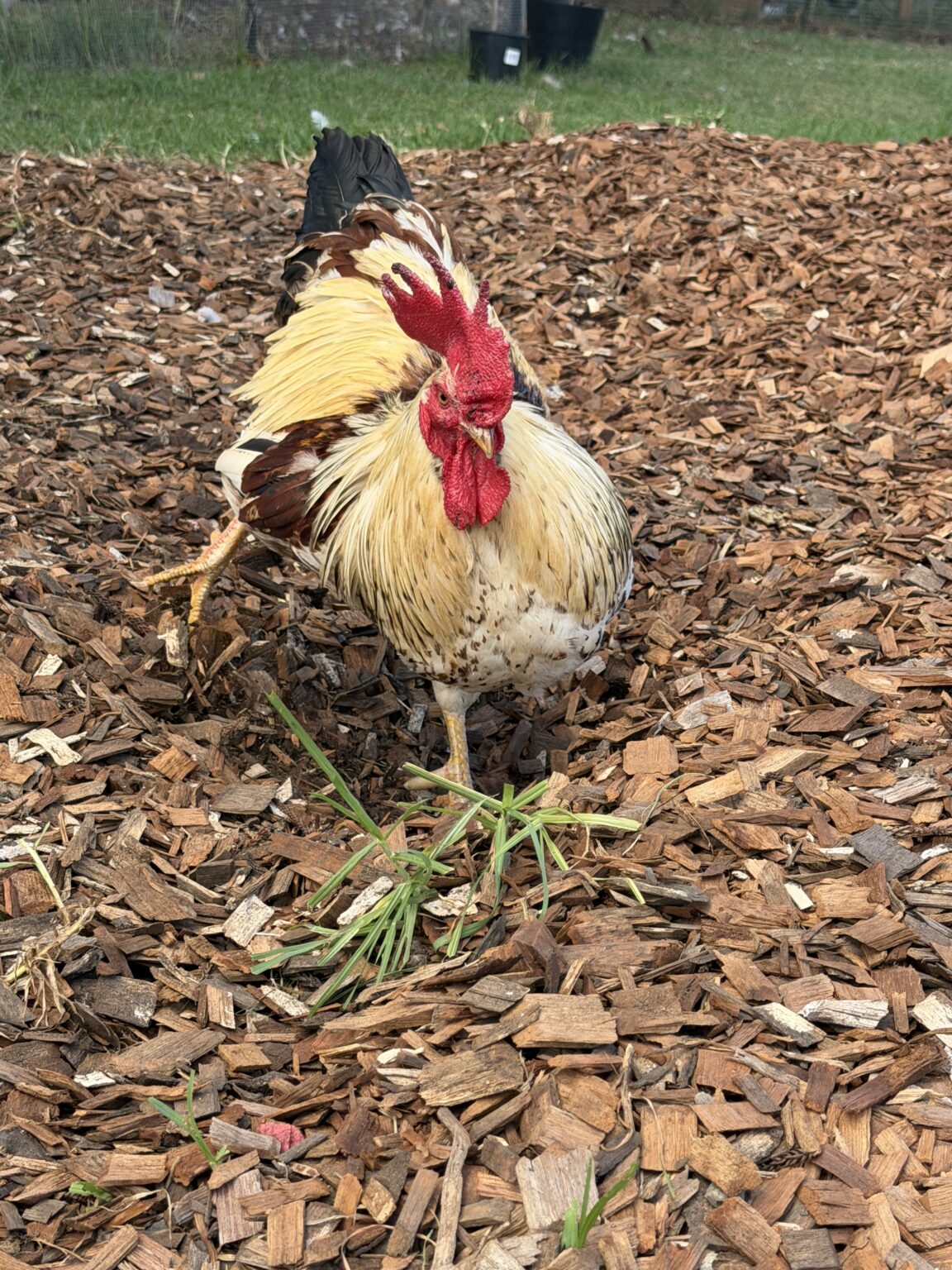
Can you keep your rooster yourself?
Before you decide to rehome him, it is worth seriously asking whether you could keep him. Roosters can be wonderful companions, and for many people the hardest part is navigating neighbours and local council rules, not the rooster himself. Here are some things worth trying before you rule it out.
Talk to your neighbours first
This is the single most important thing you can do. Go and knock on the doors of every house within earshot before a complaint ever happens. Introduce yourself, introduce the rooster by name, be honest that he crows, and genuinely ask if they have any concerns. Offer a bottle of wine, a box of chocolates or anything else that builds goodwill. Most council noise complaints about roosters come from neighbours who felt ambushed. Neighbours who were asked first, felt listened to, and were offered a small gesture of respect are far more likely to be understanding, and often surprisingly kind.
Bring your rooster inside at night
Roosters crow loudest when they can see daylight. If they sleep somewhere dark and enclosed, they usually stay quiet until well after sunrise. A large pet carrier brought inside the house works beautifully, as does a small dark room such as a garage, laundry or mud room. Placing a towel or sheet over the carrier keeps it even darker and can give you an extra hour or so of sleep in the morning.
Line the carrier with a soft blanket, or add a sturdy perch inside for him to sleep on. A simple perch can be made from two bricks with a solid stick, broom handle or length of dowel laid across the top, which is what we do here for some of our boys. Bring him in at dusk, let him out again at a reasonable morning hour, and keep the carrier clean. This one simple change is what lets many urban and suburban rooster guardians stay on good terms with their neighbours.
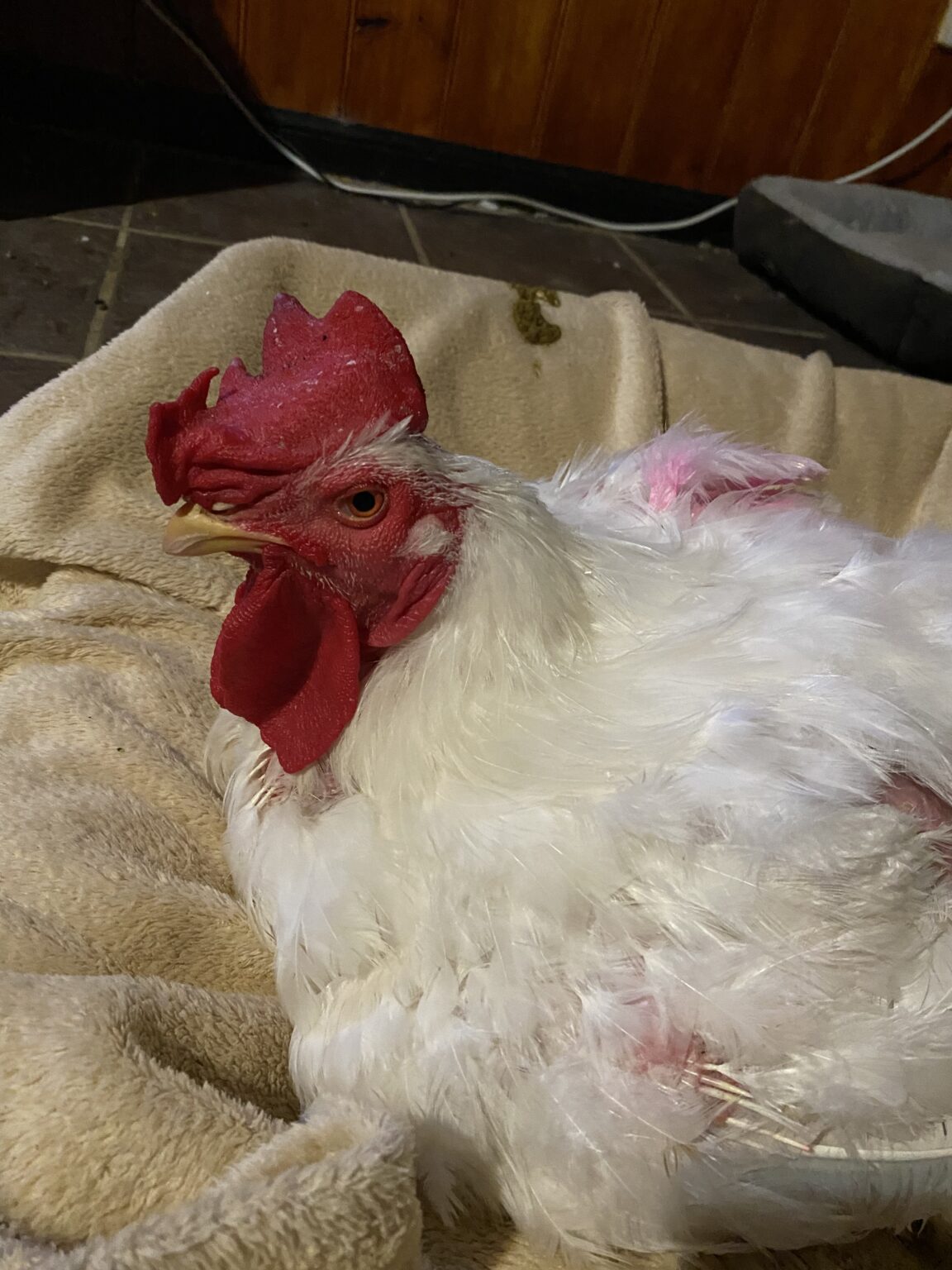
A quick note on transport. If you ever need to move your rooster in the car, please use a proper pet carrier rather than a cardboard box. Cardboard offers almost no airflow and can heat up very quickly inside a vehicle, even on a mild day, which can be dangerous and sometimes fatal. A pet carrier with plenty of ventilation, a soft blanket or towel on the bottom, and the air conditioning on gentle, will keep him safe and calm for the trip.
Please do not use crow collars
Crow collars are elastic or velcro bands that wrap around a rooster’s neck to restrict his airflow and quieten his crow. They are dangerous. Roosters die every year from collars that are fitted too tightly, that snag on something, or that slowly become too tight as the bird grows, gains weight or puffs up in stress. A rooster who sounds quieter because his airway is being pinched is a rooster who is suffering, often silently. Please do not use one under any circumstances. The dark overnight box method above is safe, kind and effective, and there is no humane version of a crow collar.
Check your local council rules
Council rules on roosters vary a lot across Australia, and some councils are more reasonable than their reputation suggests. Look up your own council’s poultry and animal keeping bylaws, because “no roosters in suburbia” is not always true. Some councils allow roosters on larger blocks, in rural residential zones, or with a permit, and some simply require that they do not cause a noise nuisance, which the overnight carrier method helps with. In practice, even in councils that do not officially permit roosters, it is usually only investigated if a neighbour lodges a formal complaint, which is another reason the effort to keep your neighbours on side is so worthwhile.
Give him a flock
A lone rooster is often a more stressed, louder rooster. If you have space, adding two or three rescued hens (please adopt, never buy) will usually make him calmer and happier, and the whole setup feels more like a small flock than a noisy solo bird. Our ex-battery hen adoption page lists Australian rescues who would love to find him some hen companions.
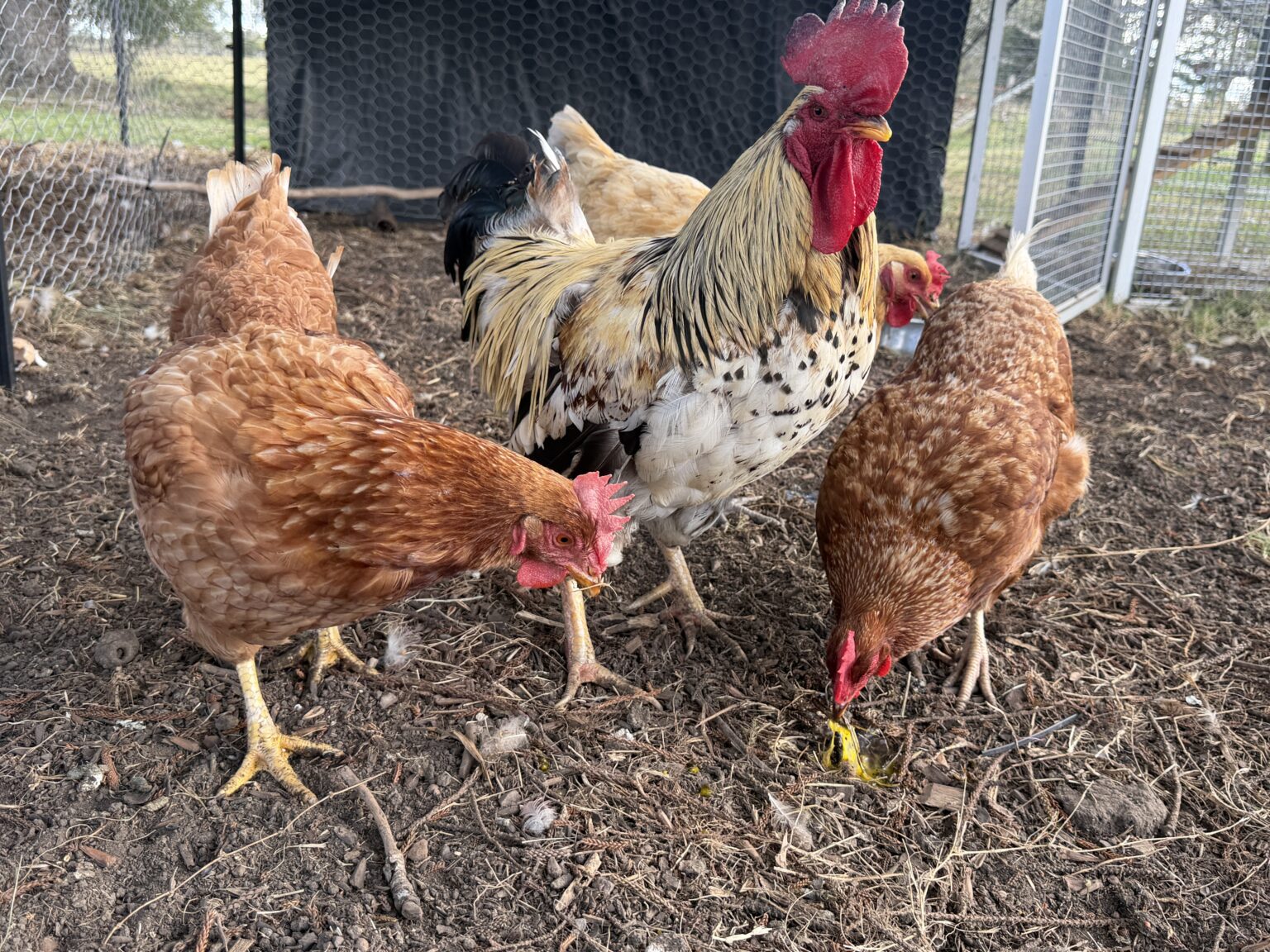
If your roosters are fighting
If you have more than one rooster and they are fighting, you usually do not need to rehome anyone straight away. The issue is often simply not enough space, or too many boys sharing the same group of hens. Creating a second enclosure is much easier than people expect. A few star pickets, a roll of chicken wire and some shade cloth will give you a safe, separate area in a weekend. Aim for something that feels like a small enclosed garden rather than a cage, with room for him to scratch, dust bathe and stretch his wings.
Some boys will happily live together as bachelors, and some will always need their own space. Watch how they behave, give them time, and do not assume a rooster who fights another rooster is a bad bird. He is just being a rooster, and a little separation often solves the whole problem.
What about an aggressive rooster?
Some roosters are harder to win over than others. A rooster who is aggressive towards humans is usually much harder to rehome, so please think carefully before giving up on him. From his point of view, he is doing a brilliant job protecting his girls from a scary stranger. That is what a good rooster is supposed to do.
We have some aggressive boys here at NSW Hen Rescue, and honestly, we understand why they do not love humans. We keep them in their own enclosures with their own girls, again aiming for a small garden rather than a cage. When we go in to feed or clean, we carry a pool noodle with us for gentle protection. It is soft enough that it cannot hurt him, but firm enough to keep him at arm’s length. Over time, treats like cut up grapes and corn win a lot of them over. If he is still having a go, picking him up gently and massaging his comb will often calm him right down. Patience really does work.
Read Quinn’s story
If you need reminding why this effort is worth it, please read They’ll Be Fine: The Lie That Costs Roosters Their Lives. Quinn’s story is a heartbreaking example of what happens when well meaning people assume that a rooster they cannot keep will somehow be fine on his own. He will not be. Your effort to try, really try, to keep or safely rehome your rooster is the thing that makes the difference between his story ending like Quinn’s and his story ending well.
How to rehome your rooster yourself
For most people who are unable to keep their rooster, or who have found a dumped rooster, rehoming him yourself will be the fastest and most likely path to a safe outcome. Here is a step by step guide to doing it well.
Step 1: Start with the people you already know
Before you post anywhere public, tell family, friends, neighbours, your vet, your feed or produce store, your local community Facebook group and anyone you know with a rural or semi-rural property. Word of mouth is still the single most effective way to find a safe home. Often the right person is closer than you think.
Step 2: Write an honest, caring rehoming ad
A good rehoming ad is honest, warm and specific. Please include:
- A clear, recent photo of your rooster (ideally a couple)
- His name, age or estimated age, breed if you know it, and a short note about his personality
- Whether he is bonded to other birds and needs to go as a pair or group
- Any known health issues, past injuries or special needs
- An honest, non-judgemental line about why you need to rehome him
- The words “pet home only, not for meat, fighting or breeding”
- That you will be screening adopters and asking questions
Please do not use the words “free to good home”. They are the quickest way to attract the worst kinds of people. A small rehoming fee, even $20 or $30, filters out many of them and shows you care about where he ends up.
Step 3: Post in the right places
Post your ad in Australian rooster and poultry rehoming Facebook groups (we suggest some types of groups further down this page), in local rural and small acreage community groups, on the noticeboard at your local feed or produce store, and to any vet clinic, Landcare group or permaculture group in your area. Please do not post roosters, or any live animals, on Gumtree or Facebook Marketplace. Both platforms prohibit the sale or rehoming of live animals in their terms of use, and they are also where most of the people you do not want your rooster going to look first. Community groups focused on poultry, rescue or ethical chicken keeping are far safer.
Step 4: Screen everyone who replies
Before you agree to meet anyone, ask them:
- Where will he live? Can you see photos of the coop or setup?
- How will they keep him safe from predators? A securely locked, fully enclosed coop at night is essential, because foxes, dogs and quolls will dig, climb and chew through anything less. Ask what their plan is for daytime predators too, including foxes, eagles, hawks, goannas and snakes, and whether the run is covered overhead and dug in at the edges.
- Do they already have hens or other roosters? How many, and what breeds?
- Have they had a rooster before, and do they understand that he will crow?
- Are they on a property where roosters are allowed under local council rules?
- What will happen if it does not work out?
- Their full name, suburb and a phone number.
If the answers are vague, evasive or rushed, or if the person becomes pushy or angry at being asked, walk away. It is absolutely fine to say no, and you never owe anyone an explanation.
Step 5: Watch for red flags
These are the warning signs we see again and again. If you spot any of them, do not hand your rooster over:
- Anyone who wants to collect immediately and will not meet in person first
- Vague or hostile answers about where he will live or who will care for him
- Anyone who says “he is for the kids” but has never had chickens before
- Any mention of soup, pot, fighting, training, free food, dogs or jokes about eating him
- People who want multiple roosters at once, especially if they cannot say why
- Anyone who refuses to share a full name, address or phone number
- Anything that makes your gut feel uneasy, even if you cannot put it into words
Trust your instincts. If something feels off, it usually is, and your rooster is counting on you to be careful.
Step 6: Meet before you hand him over
Wherever possible, deliver your rooster yourself so you can actually see where he is going to live. If you cannot drive that far, meet the adopter at least once first, ideally at their home. Bring a friend if you can, and take a few photos of the new setup so you have a record of where he was left.
Step 7: Use a simple adoption agreement
Even a one page adoption agreement makes a real difference. It can include:
- The adopter’s full name, address, phone and email
- A promise that the rooster will never be used for food, fighting or breeding for sale
- A promise that if the adopter can no longer keep him, they will contact you first before rehoming him again
- Both signatures and the date
It does not need to be fancy or legalistic. A handwritten version is fine. The act of signing it makes everyone take the commitment more seriously.
Step 8: Stay in touch afterwards
Ask for a photo update a week or two later, and again a month in. A good adopter will be happy to share. If they go completely silent or their story changes, follow up gently. Your rooster’s wellbeing is worth a little awkwardness.
Community groups where you can post your rooster
The strongest chance of finding your rooster a safe home usually comes from the right community groups. You are looking for spaces where experienced chicken guardians gather, where people understand roosters, and where thoughtful rehoming conversations are welcomed.
Some types of groups that are worth trying:
Before you post in any group, please read this. Not everyone in poultry, homesteading, permaculture or self sufficiency spaces shares our view that a rooster is family. Some people in these groups breed chickens for eggs, which creates yet more unwanted roosters. Others kill roosters for meat at the end of a so called useful life. Rehoming your rooster to be a worker, a fertiliser maker, a breeding bird or a meat bird is not what we are asking you to do here.
Your job, in any group you post in, is to find someone who will love and protect your rooster as a companion for the rest of his natural life. Please use the screening steps further up this page. Make it clear in your ad and in every message that you are looking for a permanent companion home only, and ask directly what role they see your rooster playing in their life. If the answer is anything other than a member of the family, keep looking.
- National and state rooster rehoming groups. Rooster Rehoming Australia is a large, active Facebook group dedicated to finding homes for roosters across the country, and a very good place to start.
- Your local backyard chicken or poultry group. Search Facebook for your city, region or state plus “backyard chickens”, “backyard poultry” or “chicken keepers” to find a community near you.
- Small acreage, hobby farm and homesteading groups in your region. Some people in these groups will give a rooster a wonderful companion home, but others see roosters as livestock for meat or breeding, so please screen very carefully.
- Permaculture, regenerative and self sufficiency groups, where some chicken guardians welcome a rooster into a mixed flock as part of the family. The same caution applies as above.
- Local Landcare and community garden groups, which sometimes know of suitable property owners or smallholdings looking for a resident rooster.
- Vegan and animal advocacy groups in your state, which can occasionally help connect roosters with kind, permanent homes.
Please read each group’s rules before posting, write a warm and honest ad, and be ready to answer questions from members. Never agree to hand a rooster over to someone you have not screened properly, even if they seem lovely at first.
Searching for a vegan sanctuary or animal rescue
Beyond community groups, it can be worth doing a quick online search for vegan farm sanctuaries or animal rescues in your state or region. A small number occasionally take roosters in, and even those that cannot take him may be willing to share your ad with their supporters, or suggest someone they trust. Please go in with kind and patient expectations. Almost every sanctuary and rescue in Australia is already at or beyond capacity, they are run by volunteers who are stretched thin, and they are receiving many more rooster requests every week than they could ever say yes to. A warm, honest email that does not assume they will say yes will always land better than one that does.
It is also worth being prepared to travel. Most sanctuaries are not in or near city centres, because they need land, quiet and distance from neighbours to do what they do. The volunteers who run them are also usually time poor and cannot come and collect your rooster themselves. If a sanctuary is able to help, the kindest thing you can do is offer to drive your rooster out to them, at a day and time that suits the sanctuary rather than you. A small donation towards his care, if you are able, will always be appreciated.
Please do not give up on your rooster
Rehoming a rooster is hard, but it is almost always possible with honesty, patience and a little bit of effort. Dumping a rooster at a park, reserve, farm gate or pound is not a kindness. It is almost always a slow, frightening death, and it adds to a crisis that is hurting roosters and the people trying to help them all across Australia.
Your effort really does make the difference between life and death for him. Thank you for caring enough to read this whole page. That already puts you ahead of most.